
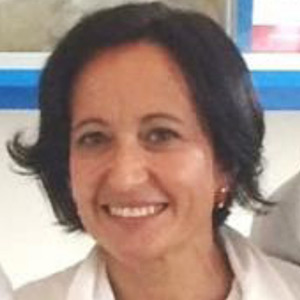
Lucia Ciranna
Keywords
Effects of serotonin on glutamate-mediated synaptic transmission in the hippocampus; effects of serotonin on synaptic plasticity in the hippocampus of wild type and Fmr1 KO mice, a model of Fragile X syndrome; pharmacological evaluation of new drug candidates.
Lucia Ciranna is an Associate Professor of Physiology at the University of Catania, where she teaches Physiology for degree programs in Medicine and Surgery (both Italian and English tracks) and Biotechnology. She heads an electrophysiology laboratory at the University of Catania’s Department of Biomedical and Biotechnological Sciences.
Education
She earned her degree in Pharmacy from the University of Catania in 1989. She subsequently obtained a European PhD in Neurophysiology from Louis Pasteur University in Strasbourg, France (1990–1994). After returning to Italy in 1994 to take up a position as a researcher and later as a university professor, she continued her studies at laboratories abroad (NIH, Bethesda, USA; Louis Pasteur University, Strasbourg, France) as part of various research projects. In France, she obtained the National Qualification to serve as a "Professeur des Universités" (Full Professor) in the field of Neuroscience. In Italy, she obtained the national qualification for the role of Full Professor. She has conducted numerous research projects, serving as either coordinator or researcher. She has led and currently leads research projects (PRIN 2007; Telethon 2013; FRAXA Research Foundation 2013; PRIN 2022 PNRR) aimed at investigating new therapies for Fragile X Syndrome.
She has authored publications in international neuroscience journals and is a member of both national scientific societies (Italian Physiological Society; Italian Society for Neuroscience) and international ones (Society for Neuroscience; European Mind and Metabolism Association).
Research Activities
Prof. Ciranna employs electrophysiological techniques (patch-clamp) to study the connections (synapses) between neurons and the plasticity of nerve transmission—processes that underpin learning and memory functions. Her current research focuses on Fragile X syndrome, a hereditary disorder characterized by intellectual disability, epilepsy, and autism. In this condition, the failure to produce a regulatory protein (FMRP) leads to alterations in synaptic plasticity within brain regions responsible for learning and memory. Professor Ciranna’s research group has discovered a new strategy to restore synaptic plasticity based on the activation of 5-HT7 receptors for serotonin, a neurotransmitter that regulates various brain functions. Specifically, the team evaluated the potential of using novel chemical compounds that activate 5-HT7 receptors to correct the disorder's symptoms in an animal model. The research findings demonstrate that these new substances could be used as therapeutic agents for patients with Fragile X syndrome.
From 2009 to the present: Alterations in synaptic plasticity, learning deficits, and autistic-like behavior in an animal model of Fragile X Syndrome (FXS)—novel therapeutic perspectives based on serotonin receptor activation.
Using the patch-clamp electrophysiological technique, my research group demonstrated that the activation of 5-HT7 serotonin receptors alters the excitability of hippocampal neurons and reverses metabotropic glutamate receptor-dependent long-term depression (mGluR-LTD) (Costa et al., 2012). This form of synaptic plasticity plays a crucial role in learning and behavioral flexibility and is pathologically enhanced in a mouse model of FXS, a genetic disorder characterized by intellectual disability, autism, and epilepsy. Using this model, we showed that 5-HT7 receptor activation inhibits mGluR-LTD (restoring synaptic plasticity to levels comparable to those of healthy mice) and corrects dendritic spine abnormalities, learning deficits, and autistic-like behavior, thereby opening new therapeutic avenues for FXS (Ciranna and Catania, 2014; Costa et al., 2015, 2018). The new perspectives arising from our work were highlighted by Osterweil, Kind, and Bear (Biological Psychiatry 2012; 72: 895-897). We have identified the mechanism of action and key intracellular messengers underlying the effects induced by 5-HT7 receptors (Costa et al., 2018; 2021). We have also discovered that PACAP (Pituitary Adenylate Cyclase-Activating Polypeptide)—a brain peptide known for its neurotrophic and neuroprotective properties—is capable of correcting altered synaptic plasticity in the hippocampus of the FXS mouse model (Costa et al., 2018; Ciranna and Costa 2019; Ciranna et al., 2021). Consequently, it might become a therapeutic tool for FXS, a condition for which no specific therapy currently exists.
In collaboration with international research groups, we have helped elucidate various mechanisms altered in the brains of animal models of FXS (D’Antoni et al., 2014; Aloisi et al., 2017; Maurin et al., 2019) and other conditions involving cognitive deficits (Leggio et al., 2021).
From 2003 to the present: Modulation of glutamate-mediated synaptic transmission in the hippocampus. We investigated the physiological effects of the endogenous neuropeptides PACAP and VIP on neuronal activity “in vivo” and on synaptic currents mediated by AMPA receptor activation at the synapse between Schaffer collaterals and CA1 pyramidal neurons in rat hippocampal slices. We observed that PACAP and VIP modulate neuronal firing rates (14) and synaptic transmission (15, 24) in the hippocampus; we identified the receptors responsible for the observed effects (PAC1 and VPAC2) as well as the intracellular mechanism of action (cAMP/PKA). Our results demonstrate that these two neuropeptides—previously considered as hormones and/or neuroprotective factors—are also capable of modulating synaptic transmission and likely influence the functions of the hippocampus, a brain structure primarily involved in learning and memory.
In another patch-clamp study, we characterized the effects of 5-HT on synaptic transmission in the hippocampus, demonstrating that activation of 5-HT1A receptors inhibits AMPA receptor-mediated synaptic currents by acting at both pre- and post-synaptic sites. Conversely, activation of 5-HT7 receptors increases the amplitude of synaptic currents by acting exclusively at the post-synaptic level (26). The effects we described may represent the physiological mechanisms underlying the opposing effects on learning induced by 5-HT1A and 5-HT7 receptor activation, as previously observed in *in vivo* behavioral studies.
2007–present: Electrophysiological study of the effects of novel ligands for ionotropic glutamate receptors (AMPA or NMDA types). Using the patch-clamp technique on rat hippocampal slices, we characterized the electrophysiological effects of newly synthesized molecules on currents induced by AMPA or NMDA receptor activation in CA1 pyramidal neurons. These studies enabled the identification of several new substances acting as antagonists at AMPA (20, 23) or NMDA (21, 22, 25, 28) receptors and allowed us to correlate their biological effects with structural modeling studies and receptor binding affinity assays.
1995–2006: Effects of 5-HT and NA in central nervous system structures involved in movement control. We performed in vivo extracellular recordings to study the effects of 5-HT and NA on neuronal electrical activity and their interactions with glutamate.
Editorial Board membership
International Journal of Neurology Research; Frontiers in Cellular Neuroscience; Current Neuropharmacology; Frontiers in Molecular Neuroscience.
Revision of grant applications
2004: Health Research Board, Ireland, (PhD Training Sites 2004).
2012: Wellcome Trust/ DBT India Alliance.
2013: Italian Ministry of Education and University (MIUR; projects PRIN2012 and FIRB 2013).
2015: Fondation pour la Recherche Médicale (France), call: “Pathophysiology of Psychiatric Diseases”.
2017: Medical Research Council (U.K.), call: MRC-Industry Asset Sharing.
2017: National Science Center (Poland), call: OPUS, NCN panel NZ4
2018: Medical Research Council (U.K.), call: Research Boards Jan 2018 Submissions.
2018: National Science Center (Poland), call OPUS, NCN panel NZ3.
2020: National Science Center (Poland), call: OPUS-18, NCN panel NZ4.
2021: National Science Center (Poland), call: OPUS, Reg. n. 2021/41/B/NZ4/02603, NCN panel NZ4.
2022: Wellcome trust/DBT India Alliance Fellowship application review (IA/I/22/1/506224).
2023: National Science Center (Poland), call: PRELUDIUM 22,Reg.n.2023/49/N/NZ4/02660, NCN panel NZ4.
2026: Grant application, call for proposal: INVITO A PRESENTARE PROGETTI DI RICERCA DI BASE Legge Regionale n. 7/2007 “Promozione della Ricerca Scientifica e Innovazione Tecnologica in Sardegna”, Italy.
Revision of scientific books
2015 to present-: Member of the Jury for the National Prize of Scientific Publication “Premio Nazionale di Divulgazione Scientifica”, Associazione Italiana del Libro.
Affiliation to Scientific societies
2009-2018 Society for Neuroscience (SfN); 2013 European Mind and Metabolism Association (EMMA); 2017-present: Italian Society for Neuroscience (SINS); 2005-present: Società Italiana di Fisiologia (SIF).